
Reasons to Consider Black and White Photography?
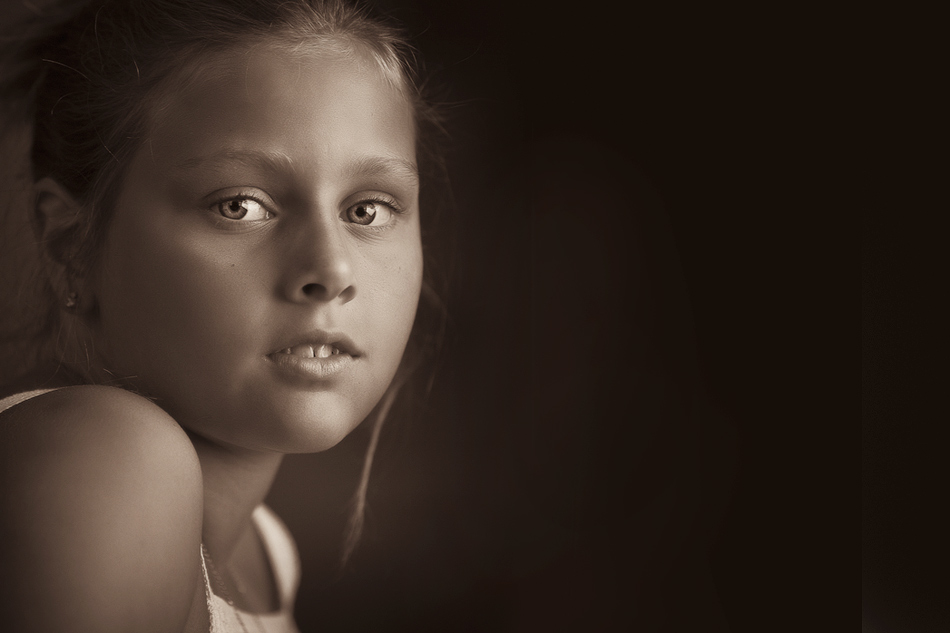
It's Classic
While Black & White photography may wax and wane in popularity, it's never completely out of style. Every few years we see a resurgence in its use in advertising images. Abercrombie, the Gap, and American express, to name just a few, have effectively used B&W in its ad campaigns over the years. You'll also find that B&W is a mainstay in the fine art and fashion worlds. That brings us to another reason B&W is a good choice.
It's Timeless
Pink and turquoise. Avocado green, gold. and orange. Mauve and teal -- all good colors -- I have nothing against them. Most of us however can immediately put dates with them-- even if they do come back in style at times. Sometimes this work in your favor, but to create a timeless look, nothing compares to a well photographed black and white image.
It's Focused
I don't mean it's in focus. Without the distraction of color, your attention is focused on the subject. Without the visual clues color provides the content of the image becomes more prominent. On the other hand stripped of color, a photograph must stand up to deeper scrutiny. It always a good measure of a pop star's talent is to see weather they can perform solo with just their voice, a piano or maybe an acoustic guitar. There are less gimmicks to fall back on -- a good way to keep it simple.
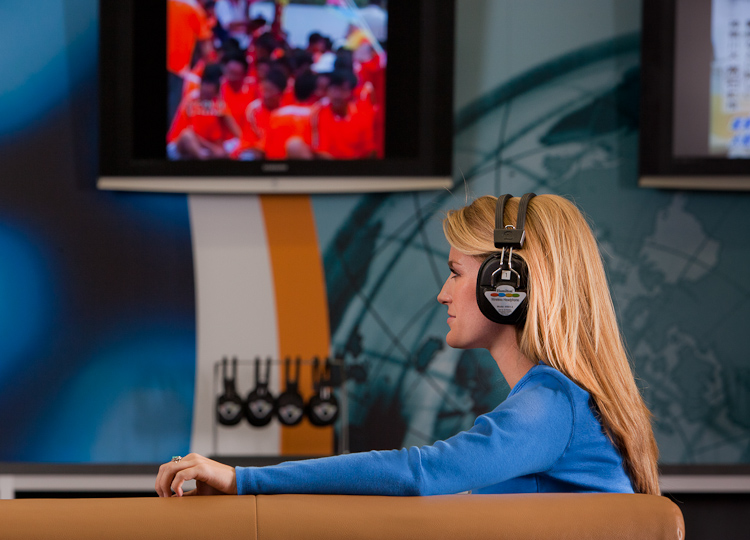
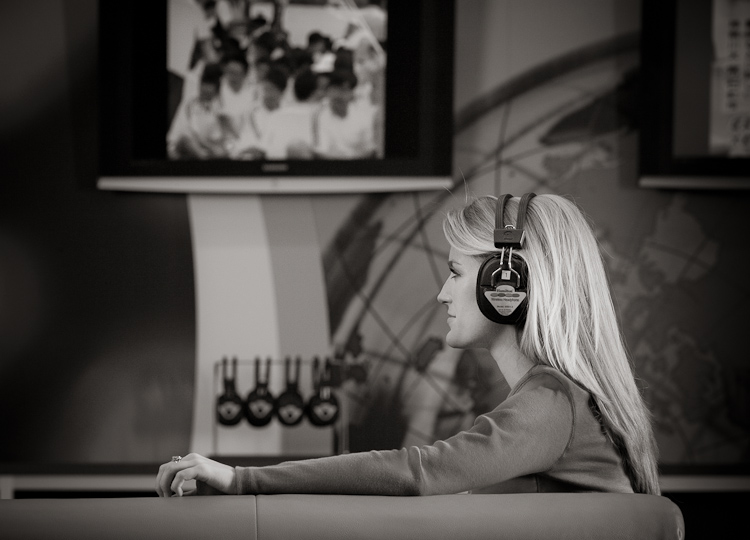
In the before and after example below I feel the colors are a bit distracting. The blue in her shirt and the blues in the background are just a bit off. The bright red on the video screen is distracting and the orange stripe and gold couch feel dated. Granted, these issues could be addressed in retouching, however they are not an issue when converted to black and white. As you move between the color and Black and white, notice your focus move to the student in the black and white version. (move the handle from left to right to view before and after)
[beforeafter]
[/beforeafter]
It's Flexible
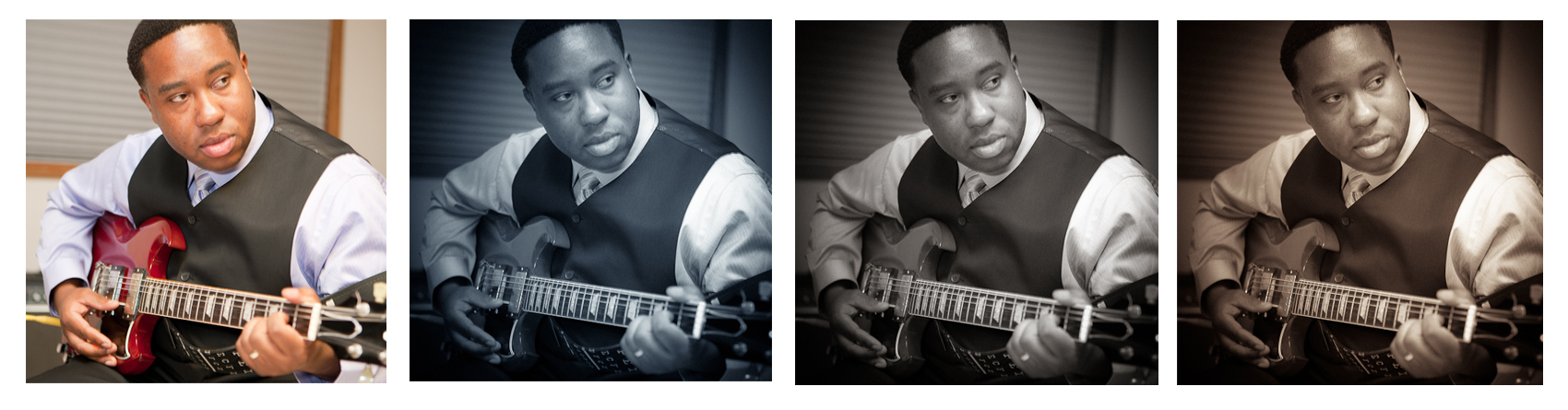
Black and White's simplicity gives it great flexibility. You can pair it with many styles from clean and modern to nostalgic and romantic. Notwithstanding the above, you can tone black and white from cool blues to warm sepia, or you can get creative and use any color.
It's a solution
At times converting an image to Black and white can completely transform it. I'm sure you have encountered a project where images come from different sources and may vary widely in quality or style. By converting the images to black and white you can create continuity in your finished piece. It also works wonders on photographs with color problems, like mixed lighting and can minimize unattractive locations. Sometimes it can even make an ordinary image feel more like a piece of art.
It can be more forgiving
This is almost a sub category of the last point, but is important to point out. I'm not sure why, but black and white images are more forgiving of technical mistakes. Slight focus issues, motion blur etc. can ruin a color photo, however the same flaws become an asset in black and white. It might just be the perception that black and white is more "artistic" therefore as such, it makes it okay. Black and white is also associated with a looser "editorial style where content trumps technique. With a few deft touches a problem photo can be transformed (see above).
It's always an option
With the advent of Photoshop and digital photography any color photo can be converted to black and white -- not that every image is suitable. It also helps to understand traditional black and white photography. Techniques once done with film, filters and in the darkroom, are now done digitally. Even so, the same techniques used in front of the camera still apply. For instance many classic Black and white movies were carefully propped with items and wardrobe that would work well on black and white film. So while you can convert any photo, the best results come from a knowledgeable pro (IMHO).
For more see: B&W portraits
About: Philip Nealey photography is a Omaha Nebraska based photographer who specializes in Advertising, Corporate, editorial and portrait photography. Philip is also a Photoshop retouching expert and can assist you with your next digital imaging , digital asset management, or pre-media project.
Featured Image: Santa Cruz Beach California
This will always be a favorite image of mine. The little girl was photographed (okay she's my little girl) on the East Coast and the panoramic in the west Coast.

Click for a bigger version.
BTW: If you haven't signed up to be on my update list you can do it now Subscribe me!
Airport Portrait Panorama
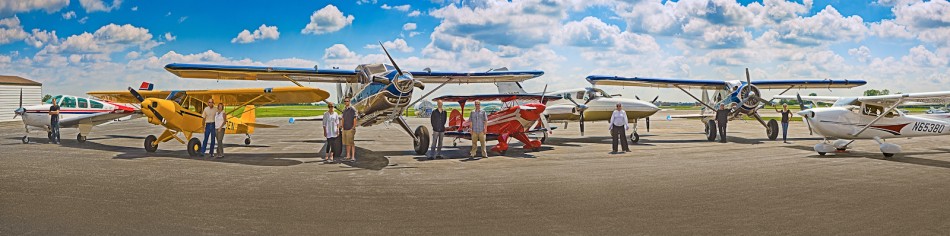
Over the summer I spent several weeks documenting a family in Chicago. We had only a few hours one day to get this shot of seven planes and the eight family pilots and their spouses. We came up with the idea on the day of the shoot so no pre-production. Three of the planes had to be flown in from other airports around chicago to our shoot location at the Dupage Airport. Once the airplanes where arranged and a private jet was moved out of the background we were ready to go, but we only had a few minutes to get the shot. It was a beautiful day, but as you can see by the shadows, not ideal lighting conditions. I tried to wait for a cloud -- but none would not cooperate. The panorama was shot in four pieces. My solution was to set up one flash head directly over the camera and rotate it (my assistant) on the axis of the camera lens. This gave me just enough light to open up the shadows. We were all extremely happy with the results, especially considering in was an impromptu shoot. The final image was put together from five exposures in Photoshop. It's hard to show how much detail is in this photo. Click on the photos below to see it bigger and broken into three parts.

Airplanes pictured from left to right: Beechcraft Bonanza, Piper Super Cub, de Havilland Turbo-Beaver, Pitts Special, Cessna 421 Golden Eagle, de Havilland Beaver, Cessna 172
For the tech geeks out there. The flash was a Speedotron 206VF head w/11" reflector connected to a Speedo 4803CX powerpack at full power (4800WS). For everyone else-- about equivalent to 10 or more on camera flash units firing at once ( flash guide number of 1000 with this reflector).
Posted via email from Philip Nealey